
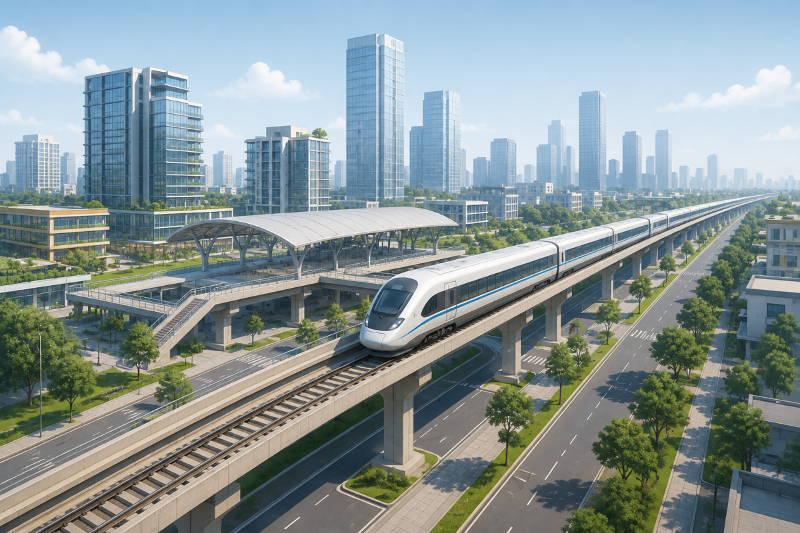
Transit-Oriented Urban Areas Proposed Along HCMC–Can Tho Railway Project
Infrastructure authorities actively advance large-scale transit integration across southern Vietnam. Specifically, project planners have proposed 28 transit-oriented urban areas along the planned Ho Chi Minh City to Can Tho railway corridor. According to a preliminary report by the My Thuan Project Management Board, these Transit-Oriented Development (TOD) hubs will integrate commercial and residential spaces directly with public transit. Consequently, this strategic urban planning framework optimizes land exploitation while maximizing national transport efficiency.
Foreign investors and infrastructure developers can leverage these high-value transport corridors to expand their regional commercial operations. To explore strategic advisory services and foreign investment compliance in Vietnam, global corporations can review our corporate team at V-International Business Consultancy Services.
Transit-Oriented Urban Areas: Technical Scope and Infrastructure Specs
The proposed high-speed railway spans over 175 kilometers through five key economic provinces in southern Vietnam.
Route Specifications and Design Guidelines
The railway infrastructure project incorporates modern technical standards to support regional mobility:
-
The rail corridor runs from An Binh Station to Can Tho Station.
-
Construction plans utilize a 1,435 mm standard gauge line for dual transport functions.
-
Passenger trains will operate at a maximum design speed of 160 km/h.
-
Freight trains will travel along the new network at speeds up to 120 km/h.
-
Construction crews will reclaim approximately 801.5 hectares of land for track construction.
Investment Capital and Implementation Timeline
Phase 1 requires a total public investment exceeding 171 trillion VND (approximately 6.5 billion USD). Project consultants recommend direct public funding over public-private partnerships based on international infrastructure outcomes. The National Assembly reviews the project’s investment policy in August 2026. Technical designs will reach completion by early 2028, with active construction starting in the third quarter of 2028.
Driving Regional Economic Growth Across the Mekong Delta
Integrating transit-oriented urban areas transforms surrounding local economies by attracting secondary commercial investments. Furthermore, seamless transport connectivity between Ho Chi Minh City and the Mekong Delta strengthens national supply chain resilience. Local provincial authorities have reached a strong consensus on pursuing these TOD land exploitation strategies.
In conclusion, constructing 28 transit-oriented urban areas along this high-speed rail corridor creates unprecedented real estate and transport opportunities. Fortunately, coordinated public investments establish a solid foundation for sustainable long-term economic expansion. For official national announcements regarding transport infrastructure policies and public investments, readers can visit the Vietnam Government Portal.