
Vietnam-China Edu-Tech Vision: To Lam’s Tsinghua Speech
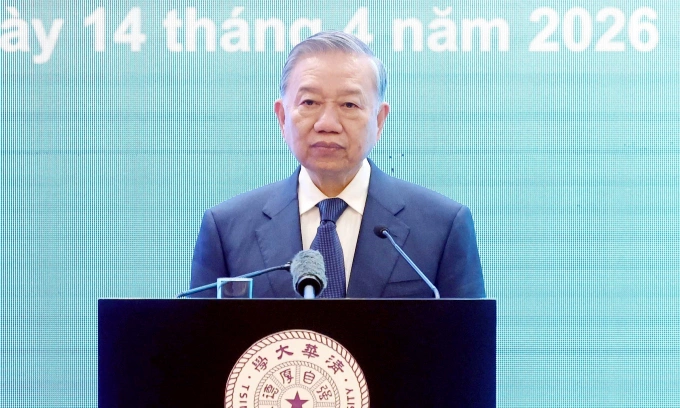
The Vietnam-China edu-tech vision took center stage as Party General Secretary and President To Lam delivered a transformative policy address at Tsinghua University on April 14, 2026. During his four-day state visit, the Vietnamese leader called for a significant expansion in science and technology partnerships. Specifically, he identified innovation and digital transformation as the fundamental pillars that will define bilateral ties in the coming era.
A Strategic Choice for Future Prosperity
To Lam emphasized that Vietnam considers its relationship with China a “strategic choice” in its foreign policy. He highlighted the deep historical roots and shared cultural foundations that bind the two nations. Currently, educational exchanges serve as a vital bridge, with approximately 25,000 Vietnamese students studying in Chinese institutions. You can read more about our regional academic partnerships at our [Internal Link: V-International Global Education Page].
Notably, the President underscored the essential role of younger generations in sustaining this friendship. He urged both nations to pay closer attention to youth and academic exchanges. Consequently, the Vietnam-China edu-tech vision relies on every citizen feeling a personal responsibility for preserving and enriching the bilateral bond.
Infrastructure and the Vietnam-China Edu-Tech Vision
Beyond education, To Lam called for more substantive cooperation in economic connectivity. He expressed a strong desire to promote strategic infrastructure links, including high-speed railways and modern border crossings. Furthermore, he emphasized the need to strengthen supply chains and logistics between the growth poles of both countries.
By enhancing these physical links, Vietnam and China can create a more resilient economic corridor. This connectivity will facilitate smoother trade flows and allow localities in both nations to develop together. Such infrastructure is crucial for the Tsinghua University Research into smart logistics and digital supply chains.
Emerging Pillars: AI and Digital Transformation
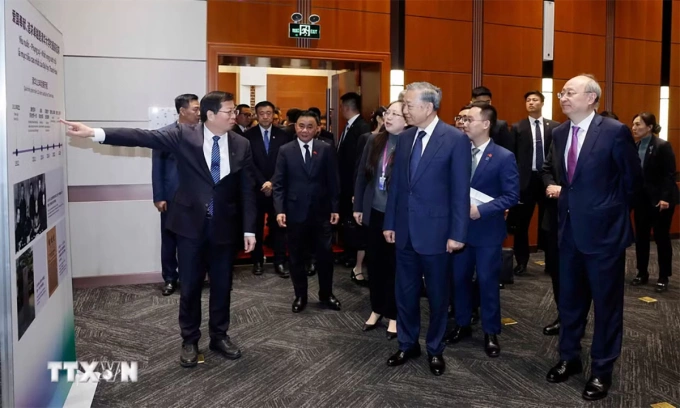
The Vietnamese leader identified science and technology as the most critical parts of the Vietnam-China edu-tech vision. This alignment supports Vietnam’s long-term development strategies toward 2030 and 2045. Specifically, he invited Chinese partners to collaborate in high-tech areas where the two sides can complement each other.
Priority sectors for joint development include:
-
Artificial Intelligence & Big Data: Leveraging China’s global leadership in computer science.
-
Semiconductors & New Materials: Building a self-reliant tech ecosystem.
-
Green Technology & Clean Energy: Addressing climate challenges through biotechnology.
-
Robotics & Cloud Computing: Enhancing industrial productivity through digital transformation.
To support these high-tech ambitions, To Lam stressed the importance of developing high-quality human resources. He specifically proposed that Tsinghua University strengthen its partnerships with Vietnamese universities through joint laboratories.
Conclusion: Realizing the Edu-Tech Vision
Finally, President To Lam noted the importance of maintaining a stable regional environment and managing differences constructively. He argued that the true value of a good neighborly relationship lies in the ability to handle challenges with mutual respect.
By focusing on the Vietnam-China edu-tech vision, both nations are building a foundation for shared success. This vision transforms the bilateral relationship into a high-tech partnership that will drive innovation across Southeast Asia for decades to come.