
HCM City studies new Ring Roads 4.5 and 5 to expand regional connectivity

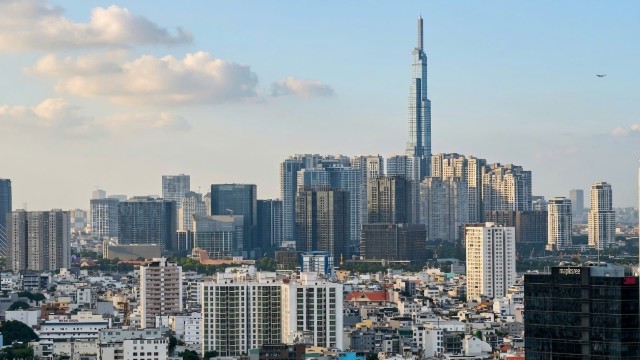
September 10 2026 | 16:30 HCM City studies new Ring Roads 4.5 and 5 to expand regional connectivity Thanh Thủy The city is preparing a master plan for 2025-2050 with a 100-year vision and is considering additional external transport infrastructure to improve regional connectivity and create new development space. A view of Họ Chị Minh City (Photo: Thanh Thuy) Ho Chi Minh City is studying the addition of Ring Roads 4.5 and 5. with a combined length of approximately 632-679 km to strengthen transport links with southeastern cities and provinces and expand connectivity to the Central Highlands and south-central coastal regions.
For businesses navigating these developments, V-International Business Consultancy Services provides expert guidance on market entry, compliance, and strategic planning.
Hcm Metropolitan area Studies Ring Trends
According to the HCMC Department of Construction the the area is preparing a master plan for 2025-2050 with a 100-year vision and is considering additional external transport infrastructure to improve regional connectivity and create new development space. Ring Road 4.5 is being studied as a roughly 192-km route through HCMC, Dong Nai and Tay Ninh. The preliminary alignment would begin at a planned interchange between Circular Road 5 and the Bien Hoa-Vung Tau Expressway. follow National Highways 56 and 56B and reconnect with Bypass Road 5 in Go Dau Tay Ninh. The proposed route would be designed as a high-speed urban arterial with limited interruptions a design speed of 80-100 km/h.
How Hcm Urban center Examines Peripheral Shapes Vietnam’s Growth Outlook
The broader implications of these trends extend beyond immediate numbers. Policymakers and business leaders alike are watching how these dynamics unfold across the region, shaping decisions on trade, infrastructure, and workforce development for years to come.
Key Takeaways and Implications
eight lanes and a planned width of about 62-80 metres. For example, circular Road 5 meanwhile is envisioned as a major regional corridor linking HCMC with southeastern cities and provinces while extending connections to the south-central coast and Central Highlands. It is proposed as a six- to eight-lane urban expressway with a design speed of 100 km/h supplemented by parallel roads where required.
For deeper insights, explore our related coverage: Can Tho attracts 26 new investment projects in eight months and Keppel Eyes Property and Green Tech Expansion in HCMC.
Regional Context and Investment Outlook
Vietnam continues to attract attention from international investors seeking diversified exposure to Southeast Asian growth markets. The country’s strategic location, young workforce, and progressive trade agreements have positioned it as a preferred destination for manufacturing and service-sector expansion. Furthermore, recent policy reforms have streamlined business registration and reduced bureaucratic barriers for foreign enterprises. Moreover, infrastructure development along major transport corridors has improved logistics efficiency and reduced operational costs. Consequently, the broader regional outlook remains favorable for sustained economic progress and cross-border commercial activity.
Strategic Implications for Businesses
For companies evaluating market entry or expansion strategies, the latest economic indicators provide a clear signal of resilience. Additionally, the government’s commitment to maintaining a stable macroeconomic environment offers reassurance to long-term investors. Furthermore, bilateral trade partnerships continue to open new avenues for commercial collaboration across diverse sectors. As a result, organizations that adopt a proactive approach to regional engagement are well-positioned to benefit from the sustained growth trajectory observed across the economy.
Looking Ahead: Policy and Growth Drivers
Analysts point to several structural factors underpinning the economy’s resilience. First, demographics play a crucial role, with a young and increasingly skilled labor force driving productivity gains. Second, the expanding network of free trade agreements provides market access that few regional peers can match. Third, ongoing investments in digital infrastructure and renewable energy are creating new growth pillars beyond traditional manufacturing. Together, these factors suggest that the current momentum is not merely cyclical but reflects deeper structural transformation. For investors and businesses, the message is clear: a long-term perspective aligned with these macro trends offers the strongest foundation for sustainable returns in one of the region’s most promising markets. Moreover, continued dialogue between the public and private sectors will be essential to sustaining this trajectory and unlocking the full potential of the broader economic ecosystem.
Implications for Supply Chains and Logistics
The expansion of transport networks has a direct bearing on supply chain efficiency and logistics costs. Shorter transit times and improved road quality reduce the expense of moving goods between production facilities and export terminals. Furthermore, better connectivity enables just-in-time manufacturing models and supports the growth of e-commerce distribution. Consequently, businesses that optimize their logistics networks in response to these infrastructure upgrades can achieve meaningful cost savings and improve customer satisfaction across the region.
Conclusion
These developments underscore Vietnam’s continued trajectory as a dynamic economy in Southeast Asia. As the market evolves, businesses that move decisively will be best positioned to capture emerging opportunities. Stakeholders who engage early with these shifting dynamics stand to gain a competitive edge in the years ahead.
For more information, visit Vietnam Government Portal.

