
Can Tho attracts 26 new investment projects in eight months
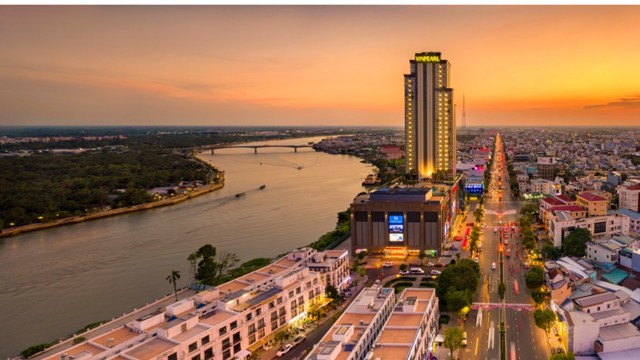
Meanwhile, september 10 2026 | 14:12 Can Tho attracts 26 new investment projects in eight months Thanh Thuy They including 23 domestic projects. three FDI ones with total investment capital of over $1.82 billion. Subsequently, a view of Can Tho city (Photo: VGP).
Meanwhile, september 10 2026 | 14:12 Can Tho attracts 26 new investment projects in eight months Thanh Thuy They including 23 domestic projects. Key figures include $1.82 billion, $1.57 billion, $25.22 million. For businesses, the practical issue is how Tho city Mekong changes market entry, compliance, and partner selection.
For businesses navigating these developments, V-International Business Consultancy Services provides expert guidance on market entry, compliance, and strategic planning.
Tho City Mekong Trends
Mekong Delta Can Tho City attracted 26 new investment projects in the first eight months of 2026. including 23 domestic projects with total registered capital of more than VND41.4 trillion (about $1.57 billion). three foreign direct investment (FDI) projects worth $25.22 million. Consequently, the city’s economy continued to maintain positive growth momentum during the eight-month period.
How Tho City Mekong Shapes Vietnam’s Growth Outlook
Key figures include $1.82 billion, $1.57 billion, $25.22 million. These numbers show how Tho city Mekong is unfolding in practice.
Furthermore, key figures underscore this trajectory: $1.82 billion, $1.57 billion, and $25.22 million were among the headline numbers, signaling robust activity in tho city.
Market Analysis and Outlook
Importantly, with industrial production trade exports business activity all showing improvements compared with the same period last year. Therefore, according to the Can Tho Department of Finance the city’s Index of Industrial Production (IIP) in August was estimated to increase 5% from the previous month. 14.2% year-on-year. For the first eight months the IIP rose 9.8% with processing.
Key Takeaways and Implications
Importantly, manufacturing continuing to serve as the main driver of industrial growth. Total retail sales of goods consumer service revenue reached more than VND24.1 trillion in August. up 4% year-on-year. For example, the eight-month total exceeded VND174.1 trillion representing a 19.5% increase.
Regional Economic Context
Nevertheless, equivalent to 43.54% of the annual target. Moreover, the value of merchandise exports foreign-currency earnings reached an estimated $530 million in August. Notably, up 2.4% month-on-month nearly 12% year-on-year. Meanwhile, during the first eight months the figure exceeded $4.098 billion.
Conclusion
These developments underscore Tho city Mekong’s continued impact on Vietnam’s economy. Businesses that move decisively will be best positioned to capture emerging opportunities.
For more information, visit Vietnam Ministry of Finance.
Source: https://en.vneconomy.vn/can-tho-attracts-26-new-investment-projects-in-eight-months.htm