
Massive VND 60 Trillion Ca Na LNG Power and Port Deals Signed
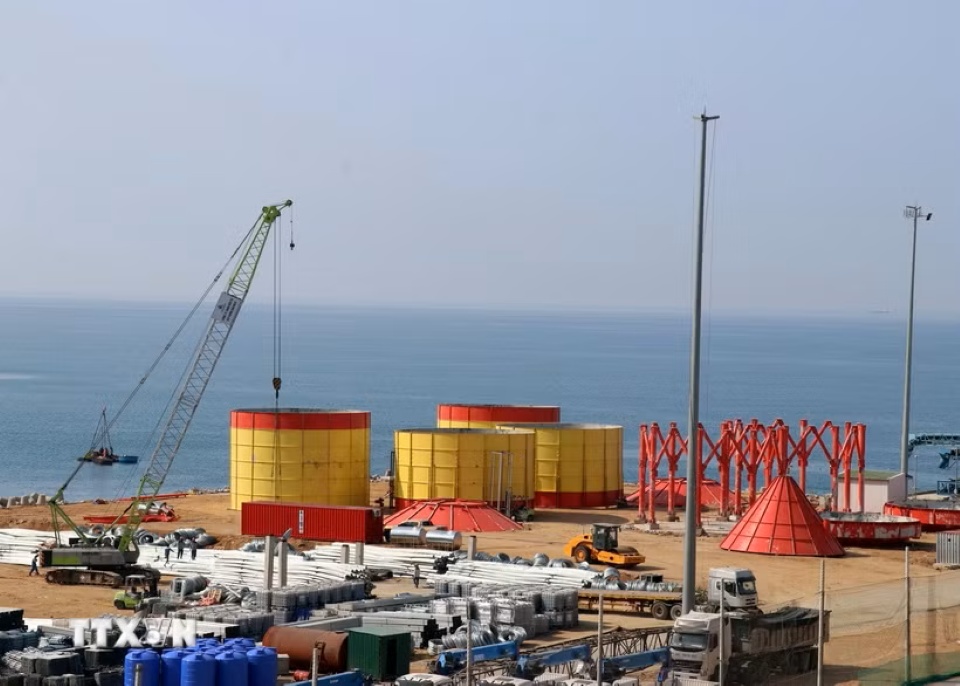
Vietnam officially signed landmark investment and financing agreements for the Ca Na liquefied natural gas (LNG) power plant and its phase-one seaport on April 10, 2026. This ambitious project represents a total capital commitment of VND 60 trillion. Specifically, the development marks a critical step forward in Vietnam’s National Power Development Plan VIII.
A Landmark Financing Structure
The project utilizes a dual-funding model to ensure robust infrastructure and energy generation. Investors will mobilize more than VND 57 trillion as direct investment for the power station. Meanwhile, the Vietnam Development Bank (VDB) will provide VND 3 trillion in credit to develop the port’s essential infrastructure.
Notably, this deal involves a consortium of domestic firms alongside Singapore-based Sideros River. This partnership represents the first time a foreign investor has participated in a Vietnamese LNG project through an international bidding process. Consequently, the project sets a new precedent for foreign direct investment in the nation’s energy sector.
Powering the National Grid
The Ca Na LNG power plant project will boast a massive capacity of 1,500 megawatts. Once operational, the facility expects to supply approximately 9 billion kilowatt-hours annually to the national grid. This output is vital for supporting Vietnam’s industrial growth and energy security through the next decade.
The technical scope of the project includes:
-
Storage and Regasification: A system with a capacity of 1–1.2 million tons per year.
-
Storage Tank: A high-capacity tank measuring 220,000 cubic meters.
-
Land Use: Development spanning more than 139 hectares of land and water surface in Ca Na Commune.
Strategic Timeline and Impact
Developers aim to launch commercial operations before 2031. Because the plant integrates with a dedicated seaport, it creates a highly efficient energy hub that can receive and process imported LNG seamlessly. Furthermore, the project supports Vietnam’s transition toward cleaner energy sources by utilizing LNG as a transitional fuel.
Finally, the Ca Na LNG power plant project reinforces Khanh Hoa’s role as a strategic growth pole for the country’s maritime and energy economy. By combining international capital with domestic expertise, Vietnam is successfully modernizing its energy infrastructure to meet global standards.