
Powerful Vietnam-Australia Agricultural Cooperation: A Greener Future
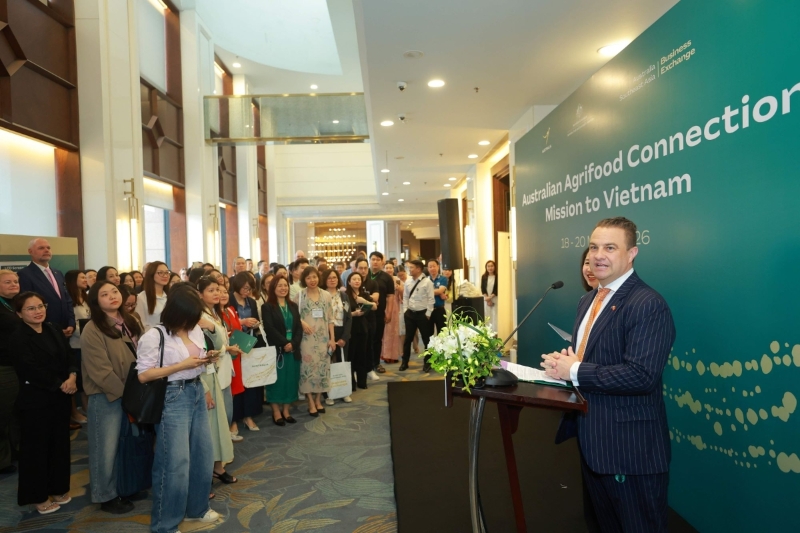
Australia’s world-class strengths in the agri-food sector perfectly complement Vietnam’s long-term development strategy. During a trade networking event in Hanoi on March 20, 2026, experts highlighted how the two nations are building a resilient food system. Specifically, this partnership focuses on high-quality, safe, and sustainable production chains.
Strengthening High-Tech Food Systems
Mr. Chris Morley, Trade and Investment Commissioner at Austrade, emphasized Australia’s international reputation for biosecurity and traceability. These rigorous standards serve as a foundation for a natural partnership. Furthermore, Vietnam-Australia agricultural cooperation now extends far beyond simple exports.
The two countries are identifying significant potential in:
-
Technology Transfer: Sharing advanced farming techniques.
-
Innovation: Developing climate-resilient crop varieties.
-
Long-term Investment: Building modern processing facilities.
These strategic areas will support Vietnam in achieving its goal of a globally competitive and eco-friendly agricultural sector.
The A-SEABX Initiative and Market Connectivity
The recent networking event was a key part of the Australia-Vietnam-Cambodia Trade and Investment Promotion Program. This initiative operates under the Australia-Southeast Asia Business Exchange (A-SEABX) framework. Notably, 28 leading Australian agri-food companies participated, underscoring a deepening interest in the Vietnamese market.
Looking ahead, Australia will continue to drive trade relations through the A-SEABX initiative. Vietnam remains a key market due to its dynamic economy and rapidly expanding middle class. Consequently, this demographic shift fuels a rising demand for transparently sourced and premium food products.
A Strategic Transformation for Vietnam
Currently, Vietnam’s agricultural sector is undergoing a massive modernization process. The government is focusing on increasing value-added production while meeting international safety standards.
“Vietnam is no longer just a traditional producer,” noted an industry expert. “It is becoming a hub for sustainable and innovative food solutions.” By collaborating with Australian partners, local businesses gain access to the tools needed to combat climate change and enhance export value.
Finally, this Vietnam-Australia agricultural cooperation stands as a testament to a shared commitment to food security. By promoting knowledge exchange across sectors—from energy to the digital economy—both nations are ensuring a prosperous and stable future for the region.