
Vietnam Agricultural Exports to Japan: Growth and Key Drivers
Vietnam’s agricultural sector has achieved a significant milestone, with Vietnam agricultural exports to Japan jumping 18% last year to hit US$237.8 million. This growth trajectory highlights the strengthening trade relationship between the two nations, driven largely by high-demand produce such as chrysanthemum flowers, bananas, and sweet potatoes.
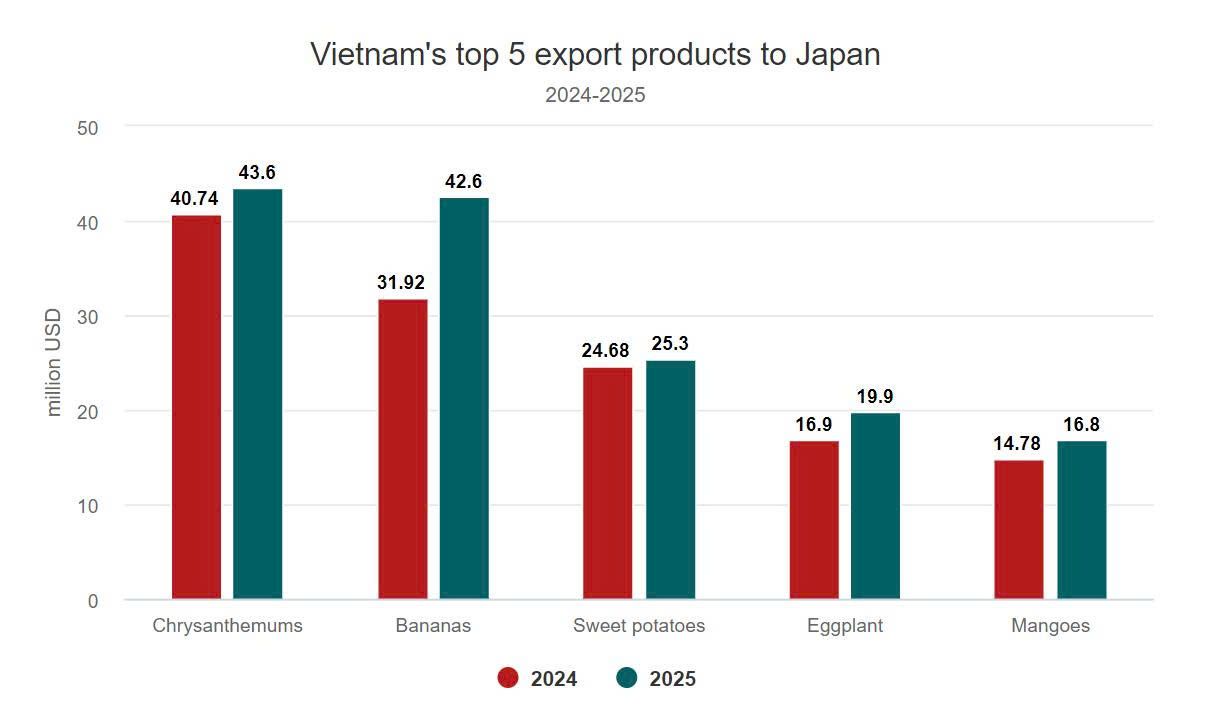
According to data from Vietnam Customs, these three product categories alone accounted for $111.6 million in total value. Chrysanthemums led the export surge with $43.6 million (a 7.01% rise from 2024), while banana exports climbed 33% to reach $42.6 million.
Factors Driving Success in Vietnam Agricultural Exports to Japan
The substantial increase in Vietnam agricultural exports to Japan is not accidental; it is the result of a deliberate strategy to develop cultivation areas that meet the world’s most stringent quality standards.
Doan Nguyen Duc, chairman of agriculture giant Hoang Anh Gia Lai, noted that maintaining consistent pricing and a reliable supply chain has been critical to capturing market share. By developing farms in both central Vietnam and neighboring Laos, companies are now ensuring year-round supply—a key requirement for Japanese retailers.
Furthermore, the geographical advantage of highland farming plays a pivotal role. The significant temperature fluctuations between day and night in these regions allow fruit to develop slowly, accumulating natural sugars, aroma, and a firm texture. This ensures that the final products not only meet the rigorous food safety requirements of the Japan Ministry of Agriculture, Forestry and Fisheries, but also provide the consistent quality and appearance that Japanese consumers demand.
Future Outlook and Diversification
Beyond the primary drivers, other items are showing strong momentum. Eggplant exports grew by 17.7% to $19.9 million, while mango exports rose 13.6% to $16.8 million.
As the Vietnam Fruit and Vegetable Association points out, Japan remains a premium market where buyers are willing to pay for quality. The success of these products serves as a roadmap for the future of Vietnam agricultural exports to Japan. To maintain this competitive edge, Vietnamese enterprises must continue to focus on:
-
Traceability: Implementing transparent, farm-to-table tracking systems.
-
Sustainable Packaging: Meeting Japan’s specific eco-friendly and protective packaging needs.
-
Product Diversification: Expanding beyond fruit into the high-demand fresh flower and vegetable sectors.
By continuing to prioritize these standards, Vietnam is well-positioned to cement its status as a top-tier agricultural partner for the Japanese market.
Click here to read more about Vietnam export.