
Significant Australia Vietnam Green Transition Funding Unleashed
Australia has officially provided AUD 75 million to catalyze Vietnam’s green transition. During the Vietnam–Australia Green Transition Forum 2026 on April 9, Consul General Sarah Hooper announced this substantial financial package. Specifically, the funding aims to bridge the gap in sustainable infrastructure and accelerate Vietnam’s journey toward its 2050 Net Zero goals.
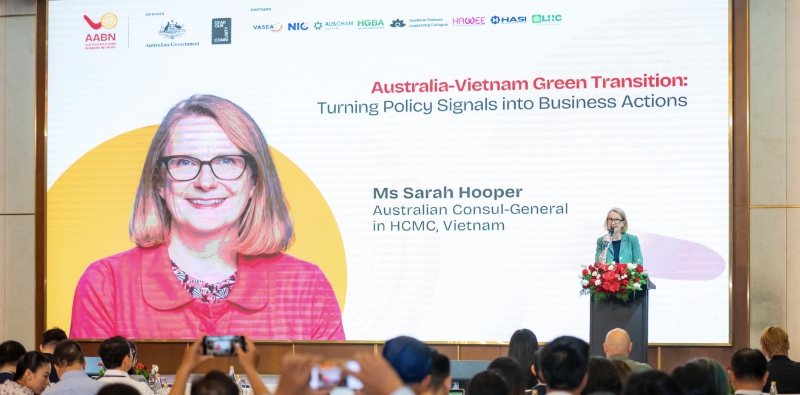
Strategic Investment in Sustainable Infrastructure
Export Finance Australia arranged the AUD 75 million facility, which it on-lent through VPBank. This partnership specifically targets sustainable and critical infrastructure projects across the nation. Ms. Hooper confirmed that Australia’s Southeast Asia Economic Strategy to 2040 identifies Vietnam as a priority partner for clean energy and sustainable agriculture.
Furthermore, Australia is expanding development initiatives like Aus4Growth and Aus4Innovation. These programs support:
-
Digital Transformation: Modernizing the economy through technological integration.
-
Clean Energy Cooperation: Strengthening the transition away from coal-fired power.
-
High-Tech Agriculture: Using satellite data and AI in the Mekong Delta to slash CO₂ emissions.
Unlocking Capital through Policy Innovation

Vietnam expects to mobilize over $300 billion for climate finance in the coming years. However, unlocking these resources requires a more investor-friendly environment. Mr. Pham Tien Dac from Vietnam’s International Financial Center (IFC) noted that the newly launched institution will play a pivotal role in this process.
The IFC plans to streamline administrative procedures, potentially shortening licensing timelines to just five to seven days. Additionally, the government will introduce “sandbox” mechanisms to support innovation in green technologies.
Bridging the Gap Between Investors and Projects
Despite available capital, many investors remain hesitant due to a lack of transparency. Ms. Ellen Van of Mekong Capital emphasized that businesses must proactively improve their ESG reporting. “Capital is available but not being deployed,” she noted, pointing to the need for robust data systems to build trust.
Experts at the forum also shifted the conversation from “pure green” to “transition.” For many Vietnamese manufacturers, immediate green standards are difficult to meet. Therefore, recognizing incremental steps—such as waste heat recovery—is essential for a meaningful transition.
Conclusion: A Coordinated Path to Net Zero
Finally, the Australia Vietnam green transition funding represents more than just financial aid; it is a catalyst for structural change. By connecting Australian expertise with Vietnam’s growing market, both nations are building a resilient, low-carbon future.
As the forum concluded, participants agreed that transparency and policy clarity remain the key enablers of success. Through coordinated efforts between the public and private sectors, Vietnam is well-positioned to remain a competitive growth pole in the global green economy.