
Semiconductor Research Cooperation: Vietnam and Japan Fund Five Landmark Joint Projects in 2026
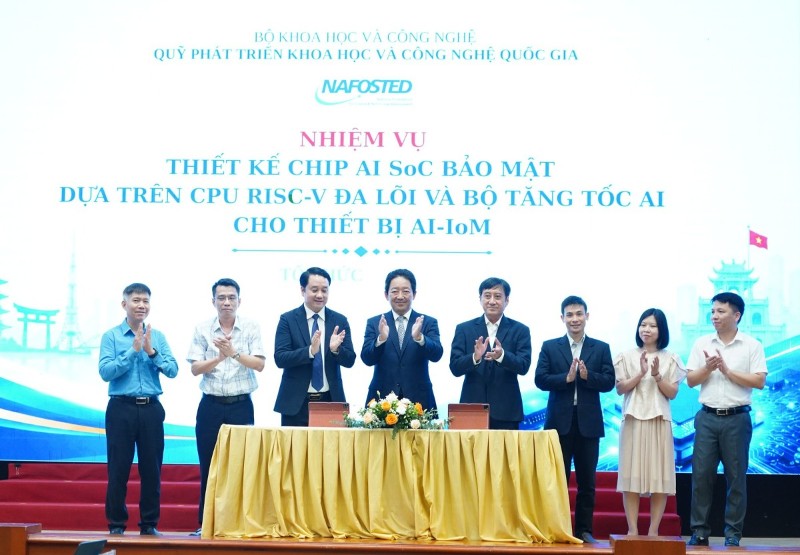
Vietnam and Japan actively strengthen their high-tech partnership through substantive scientific initiatives. Specifically, the National Foundation for Science and Technology Development officially announced funding agreements for five joint research projects on July 22, 2026. This strategic milestone marks a shift from passive networking toward the execution of advanced technical programs. The Ministry of Science and Technology directly oversees this bilateral research agenda to advance national digital transformation. Consequently, expanding this high-tech bilateral alliance establishes a highly competitive foundation to elevate regional microchip production.
Multinational tech corporations can leverage these state-backed research initiatives to optimize their regional research and development operations. To evaluate these emerging high-tech market opportunities smoothly, global investors can review our comprehensive advisory services at V-International Business Consultancy Services.
Funding High-Impact Technical Projects Under Semiconductor Research Cooperation
The joint funding framework focuses on solving complex engineering challenges across microchip design, advanced materials, and power devices. Under these supportive state grants, research teams combine theoretical simulations with practical laboratory experiments.
Designing Secure AI System-on-Chip Architectures
The first selected project focuses on designing secure artificial intelligence system-on-chip architectures for smart devices. Vietnamese and Japanese engineers will develop custom multi-core RISC-V processors integrated with dedicated neural accelerators. This specialized chip architecture targets Internet of Things applications requiring rapid, low-power data processing. By mastering open-source RISC-V CPU designs, domestic engineers enhance national technological sovereignty in hardware security.
Developing Wide-Bandgap Materials and CFET Integrated Circuits
Simultaneously, four additional research teams will advance specialized materials science and Next-Gen manufacturing methods:
-
Researchers will synthesize wide-bandgap semiconductors to build power management chips for high-performance industrial equipment.
-
Scientists will formulate advanced semiconductor materials to construct integrated environmental sensors and renewable energy systems.
-
Engineering teams will combine computer modeling and physical testing to develop high-electron-mobility transistors.
-
Specialized technicians will design, simulate, and fabricate next-generation three-dimensional complementary field-effect transistor (CFET) integrated circuits using silicon thin-film transistors.
Strengthening National Innovation and Technological Capabilities
This strategic semiconductor research cooperation puts Vietnam’s national science, technology, and digital policies directly into practice. Therefore, state authorities prioritize long-term technical skill transfers between domestic universities and Japanese research institutions.
Elevating Regional R&D Ecosystems and Talent Pipelines
By working directly alongside Japanese microchip experts, Vietnamese researchers gain direct hands-on experience with cutting-edge fabrication equipment. This practical knowledge transfer accelerates the growth of local high-tech talent pools across major industrial hubs. Furthermore, these joint laboratories create a strong bridge between academic research and commercial microchip manufacturing. This synchronized workforce preparation ensures that Vietnam offers a highly skilled engineering base for incoming foreign semiconductor investments.
Mitigating Global Supply Chain Risks in the Microchip Sector
Developing local technical capabilities helps Vietnam protect its domestic electronics industry against international supply chain disruptions. Mastering core chip design principles and advanced materials manufacturing enables local firms to produce customized microchips internally. Consequently, this strategic research framework strengthens Vietnam’s position within global high-tech value chains. The country continues to position itself as a reliable, future-proof technology partner in Southeast Asia.
In conclusion, this landmark research alliance introduces an exceptionally lucrative era for microchip innovation and high-tech manufacturing. Fortunately, these state-backed bilateral frameworks offer global technology enterprises a remarkably secure, well-connected investment anchor. For official national announcements regarding science, technology, and research grants, readers can consult the Vietnam Government Portal.