
Historic Vietnam-Russia Nuclear Power Cooperation Agreement
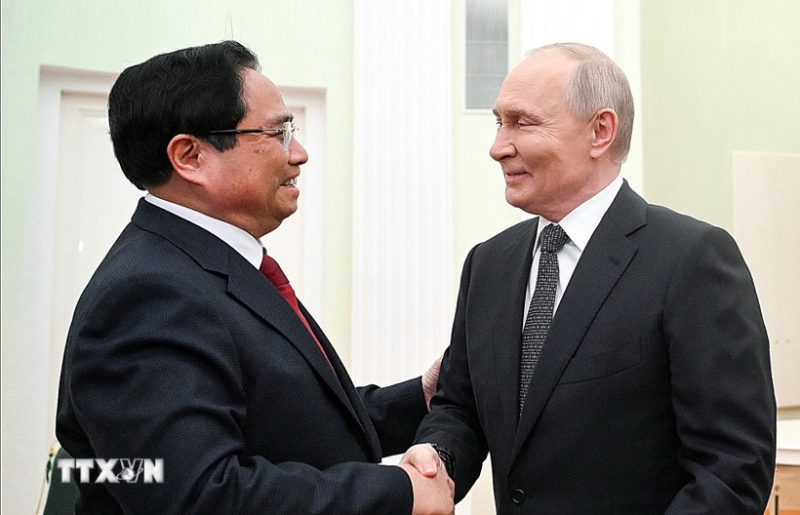
In a landmark meeting in Moscow on March 25, 2026, Prime Minister Pham Minh Chinh and President Vladimir Putin committed to a new era of strategic ties. The most significant outcome of the visit was the formal signing of an intergovernmental agreement to construct Vietnam’s first nuclear power plant. This breakthrough in Vietnam-Russia nuclear power cooperation signals a major shift in the regional energy landscape.
A New Symbol of Strategic Friendship
President Putin described the Ninh Thuan 1 nuclear power plant as an essential direction for bilateral growth. He pledged to direct the Russian Government to expedite the next steps for the project. Consequently, this facility will serve as a modern symbol of friendship, ensuring long-term energy security and sustainable development for Vietnam.
To support this high-tech transition, the two leaders also agreed to:
-
Expand Oil and Gas Investment: Encouraging enterprises to scale up operations in each other’s territories.
-
Enhance Science and Technology: Focusing on biomedicine, aerospace, and emerging high technologies.
-
Strengthen Security Ties: Increasing cooperation in military-technical and science fields.
Breaking Bottlenecks in Trade and Finance
While energy took center stage, the leaders also addressed critical economic hurdles. Specifically, they committed to diversifying supply chains and addressing institutional bottlenecks related to payments and transport. By encouraging business connectivity, both nations aim to achieve balanced and sustainable growth in bilateral trade.
Furthermore, PM Chinh praised Russia’s leadership in basic sciences. He proposed building on the success of the Vietnam–Russia Tropical Center to expand research into high-tech sectors. This collaborative approach will help Vietnam absorb advanced technologies more effectively.
Boosting People-to-People Connectivity
Beyond industrial ties, the summit focused on the citizens of both nations. Notably, President Putin assigned the Russian Foreign Ministry to consider visa exemptions for Vietnamese citizens. This move aims to significantly increase tourism and cultural exchange.
Additionally, Russia will increase scholarships for Vietnamese students. This initiative ensures a steady flow of high-quality human resources trained in Russian technical excellence. Currently, over 1,000 Vietnamese engineers already study at the National University of Science and Technology (MISIS) in Moscow.
Conclusion: A Global Strategic Alignment
Finally, the two leaders exchanged views on international issues and agreed to maintain mutual support at the United Nations and ASEAN. Kremlin Spokesman Dmitry Peskov described the negotiations as “very productive,” labeling the nuclear agreement as a definitive breakthrough.
As PM Chinh concluded his visit, he extended an official invitation to President Putin to visit Vietnam. The President accepted with pleasure, marking the beginning of a revitalized Vietnam-Russia nuclear power cooperation that will define the next decade of partnership.