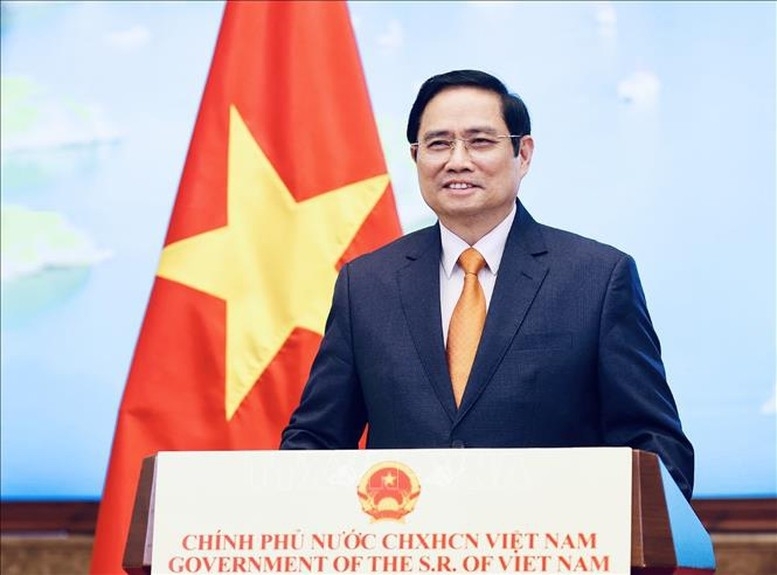
Prime Minister Pham Minh Chinh has officially established a National Steering Committee to drive Vietnam state economy development and implement Resolution No. 79-NQ/TW.
Leadership and Governance Structure
Specifically, the committee is a high-level strategic body led personally by Prime Minister Pham Minh Chinh. In addition to his leadership, Deputy Prime Ministers Nguyen Chi Dung and Ho Duc Phoc, along with Minister of Finance Nguyen Van Thang, will serve as Vice Chairs.
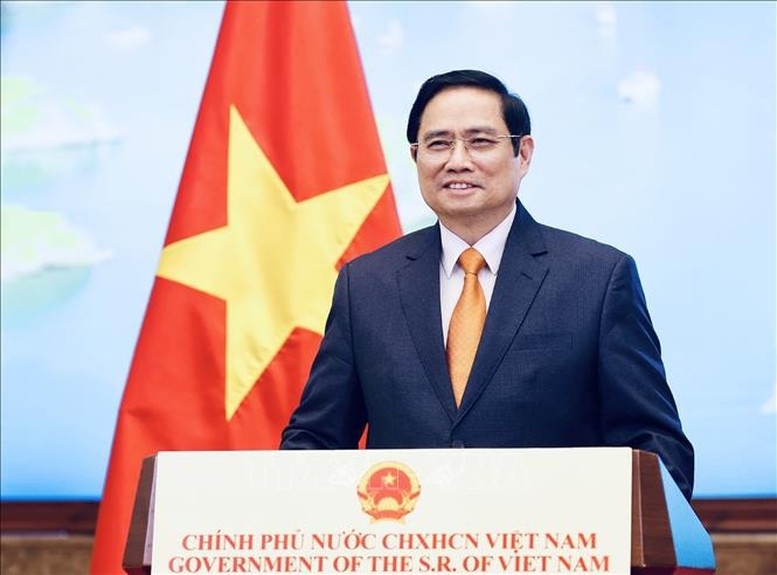
Furthermore, the primary mission of this committee is to assist the Prime Minister in directing and coordinating inter-sectoral issues. Consequently, by streamlining decision-making, the government ensures that state resources are utilized effectively to meet national objectives.
The Role of Resolution 79-NQ/TW in Economic Growth
Notably, Resolution 79-NQ/TW, issued on January 6, reaffirms that the State economy remains the leading force in the nation’s financial landscape. This policy is essential because it maintains macroeconomic stability and safeguards major economic balances.
Regarding the new guidelines for Vietnam state economy development, State-owned enterprises (SOEs) are now expected to operate on a fair and transparent basis. Moreover, the resolution emphasizes that the State sector is equal before the law. As a result, these entities must compete and cooperate with other sectors through equitable access to markets.
Ambitious 2030 Targets for State Enterprises
Finally, Vietnam has set bold benchmarks for its corporate giants. In particular, by 2030, the strategy for Vietnam state economy development aims to achieve the following:
-
First, to have 50 SOEs ranked among Southeast Asia’s 500 largest firms.
-
Second, to see one to three SOEs entering the global top 500 rankings.
In summary, these targets reflect Vietnam’s commitment to building world-class enterprises that can compete internationally while anchoring the domestic economy.